

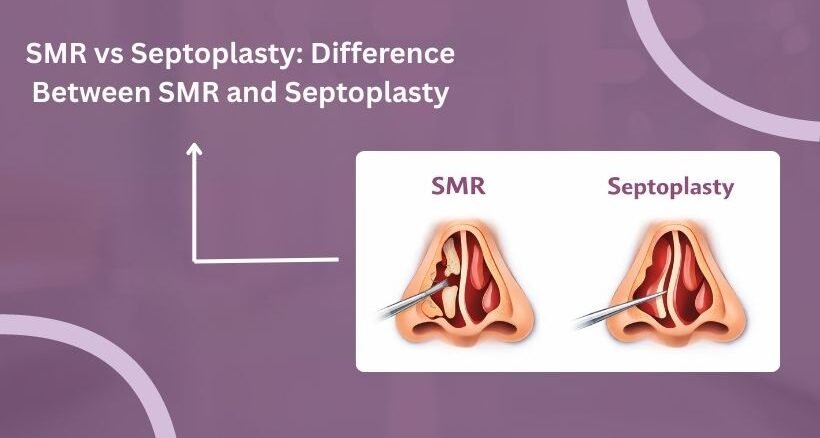
If you are struggling with a blocked nose, mouth breathing, snoring, or repeated sinus infections, your ENT specialist may suggest surgery to correct a deviated septum. While researching, you might see two common procedures: SMR vs septoplasty.
Many patients ask:
What is the difference between SMR and septoplasty?
Which surgery is better for breathing problems?
Although both surgeries treat the same condition, they use slightly different techniques. In this complete guide, we explain SMR vs septoplasty, their differences, recovery, risks, and how to choose the right option.
This article is medically reviewed by Dr Simple Bhadania, an experienced ENT surgeon who regularly performs septal surgeries to help patients breathe comfortably and sleep better.
What is SMR (Submucous Resection)?
SMR surgery (Submucous Resection) is a traditional procedure used to correct a deviated nasal septum.
In SMR:
- The surgeon removes portions of bent cartilage and bone
- Tissue beneath the mucosal lining is excised
- The septum is straightened to improve airflow
This method focuses more on removing the crooked parts to create space for breathing.
SMR has been performed successfully for many decades and is still useful in certain severe deviations.
What is Septoplasty?
Septoplasty surgery is a modern and more conservative approach to treating a deviated septum.
In septoplasty:
- The lining (mucosa) is gently lifted
- Cartilage and bone are reshaped rather than removed
- Maximum tissue is preserved
- The septum is repositioned and supported
Today, most ENT surgeons prefer septoplasty because it is precise, tissue-preserving, and offers faster recovery.
SMR vs Septoplasty – Key Differences
When comparing SMR vs septoplasty, the main difference lies in how much tissue is removed and how the septum is corrected.
Here’s an easy comparison:
SMR vs Septoplasty Comparison Table
| Feature | SMR | Septoplasty |
|---|---|---|
| Technique | Removes septal tissue | Reshapes septum |
| Tissue removal | More | Minimal |
| Preservation | Less | High |
| Recovery | Moderate | Faster |
| Risk | Slightly higher | Lower |
| Modern preference | Less common | Most preferred today |
| Precision | Traditional | Advanced instruments |
7 Major Differences Between SMR and Septoplasty
1. Surgical Technique
- In SMR (Submucous Resection), the surgeon removes the bent or crooked parts of the septum from under the nasal lining to make the airway clear.
- Septoplasty, however, involves gently lifting the mucosal lining, directly reshaping or repositioning the septal cartilage and bone, and then placing the lining back, allowing more controlled correction.
2. Tissue Removal
- SMR usually removes more cartilage and bone to straighten the nose.
- Septoplasty removes very little tissue and focuses more on reshaping and preserving the natural structure of the nose.
3. Precision
- SMR uses traditional surgical methods and mainly focuses on removing the blocked parts.
- Septoplasty uses modern instruments that allow the surgeon to work more precisely and gently.
4. Recovery Time
- After SMR, there may be slightly more swelling and recovery can take a bit longer because more tissue is removed.
- After septoplasty, healing is often faster since the surgery is less invasive and preserves more tissue.
5. Pain & Discomfort
- Patients who undergo SMR may feel more pressure or discomfort in the first few days.
- Patients who have septoplasty usually experience less pain and feel more comfortable during recovery.
6. Risk of Complications
- Because SMR removes more tissue, there may be a slightly higher chance of problems like bleeding or a small hole in the septum (rare).
- Septoplasty generally has fewer risks because most of the natural tissue and lining are preserved.
7. Long-Term Results
- SMR improves breathing by removing the blockage, but removing too much tissue may sometimes weaken support.
- Septoplasty keeps the septum strong while correcting the shape, so results are often more stable and long-lasting.
Which Surgery is Better – SMR or Septoplasty?
Most patients ask:
Which is better: SMR or septoplasty?
Septoplasty is preferred when:
- Mild to moderate deviation
- Tissue preservation important
- Faster recovery desired
- Cosmetic stability needed
SMR may be better when:
- Severe deviation
- Thick or damaged cartilage
- Large obstruction present
The final decision depends on your nasal anatomy and surgeon’s assessment.
Dr. Simple Bhadania carefully evaluates each patient and recommends the most effective option for long-term breathing relief.
Recovery After SMR or Septoplasty
Both procedures are day-care surgeries.
Recovery timeline:
- 2 – 3 days → mild swelling & congestion
- 1 week → return to work
- 2 – 3 weeks → normal breathing improves
- 6 – 8 weeks → complete healing
Recovery tips:
- Keep head elevated
- Avoid nose blowing
- Use saline spray
- Avoid heavy exercise
- Follow medications
Risks and Complications
Both surgeries are safe when performed by an experienced ENT surgeon.
Possible risks include:
- Bleeding
- Infection
- Swelling
- Septal perforation (rare)
- Temporary blockage
Choosing a skilled surgeon significantly reduces complications.
Why Choose Dr. Simple Bhadania for Septal Surgery?
- Experienced ENT surgeon
- Advanced surgical techniques
- Minimal trauma approach
- Faster recovery
- Personalised treatment
- High patient satisfaction
If you’re considering SMR vs septoplasty, expert guidance ensures the best outcome.
Conclusion
Understanding SMR vs septoplasty helps you make an informed decision about your nasal surgery.
Both procedures effectively correct a deviated septum. The key difference between SMR and septoplasty lies in technique, tissue removal, and recovery.
If you’re experiencing chronic nasal blockage or breathing problems, consult an experienced ENT specialist like Dr. Simple Bhadania to determine the right treatment.
Better breathing means better sleep, more energy, and improved quality of life.
FAQs
What is the difference between SMR and septoplasty?
SMR removes more septal tissue, while septoplasty reshapes and preserves cartilage. Septoplasty is generally less invasive.
Is SMR outdated?
Not completely. It’s still useful for severe cases, but septoplasty is more commonly preferred today.
Does septoplasty change nose shape?
No. It is an internal surgery and does not affect external appearance unless combined with rhinoplasty.
Which surgery has faster recovery?
Septoplasty usually offers faster and more comfortable recovery.
How soon will breathing improve?
Most patients notice improvement within the first week.