

You felt something. A bump. A puffiness. Something that was not there before. And now you are wondering: is this a lump or just swelling? Are they the same thing? Should you be worried?
You are not alone. This is one of the most common questions people have. And the good news is most lumps and swellings are not dangerous. But knowing the difference between lump and swelling helps you understand what your body is telling you and when it is time to get it checked.
This guide explains both in plain.
What is a Lump?
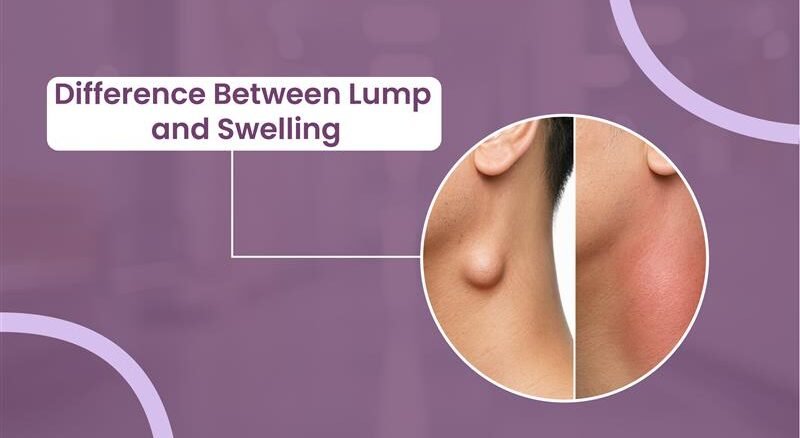
A lump is a defined, localized mass you can feel under or on your skin. It has clear edges. When you press on it, it sits in one spot and does not spread. Think of it like a pea or small marble sitting just under your skin.
Lumps can be:
- Soft and squishy (like a lipoma, which is a harmless fatty lump)
- Hard and firm (like a cyst or a swollen gland)
- Painless or tender when you press it
- Slow-growing or appearing suddenly
- Movable under your fingers or fixed in place
Most lumps are completely harmless. But some need attention, especially if they are hard, fixed in place, painless, or getting bigger over time.
What is a Swelling?
Swelling is different. It is usually a broader, more spread-out puffiness in a part of your body. It does not have sharp edges like a lump. The whole area looks or feels larger than normal.
Swelling usually happens because your body is sending fluid to an area to fight infection, heal an injury, or respond to an irritant. This is called inflammation.
Common examples of swelling include:
- Your ankle puffing up after a sprain
- Your face swelling after an allergic reaction
- Your throat feeling thick and full during a bad cold
- Redness and warmth around an insect bite or wound
Swelling often comes with other signs: redness, warmth, tenderness, and sometimes fever. These are all signs that your immune system is working hard to protect you.
Lump vs Swelling: Key Differences
Here is a simple comparison to help you tell them apart:
| Lump | Swelling |
| Has clear, defined edges | Spread out with no clear boundary |
| Feels like a separate mass or ball | Feels like puffiness or fullness |
| Can be hard, soft, or rubbery | Usually soft and fluid-like |
| May grow slowly over weeks or months | Often appears quickly, within hours or days |
| May be completely painless | Often tender or painful to touch |
| Caused by tissue growth, cyst, or gland | Caused by injury, infection, or allergy |
| Stays in one spot when pressed | Does not feel like a separate mass |
One important thing to know: swelling can sometimes hide a lump underneath it. This is why a doctor’s examination is always the safest step when you are unsure.
Common Types of Lumps in the Body
Not all lumps are the same. Here are the most common types:
Harmless Lumps
- Lipoma: A soft, rubbery lump made of fatty tissue. It moves easily under your fingers, is usually painless, and is very common. Almost always harmless.
- Cyst: A fluid-filled sac under the skin. Feels smooth and round. Can appear on the face, neck, scalp, or back.
- Skin tag: A small flap of skin hanging off the surface. Completely harmless.
Infection-Related Lumps
- Swollen lymph node: Your lymph nodes are tiny glands that swell when your body fights an infection. They are common in the neck, armpits, and groin and usually go down once the infection clears.
- Abscess: A painful, pus-filled lump caused by a bacterial infection. Usually red, warm, and very tender.
Lumps That Deserve Attention
- A lump that is hard or firm when pressed
- A lump that does not move, even when you try to shift it with your fingers
- A painless lump that keeps growing slowly
- Any lump larger than 2 cm (roughly the size of a grape)
- A lump in the neck, throat, or near the jaw that does not go away after two weeks
These signs do not automatically mean something serious. But they should always be checked by a doctor early.
Common Causes of Swelling
Swelling can happen for many reasons. Most settle on their own once the cause is addressed:
- Injury or trauma: A fall, knock, or sprain causes fluid to rush to the area, creating visible puffiness.
- Infection: Bacteria or viruses trigger inflammation. The skin around the area becomes red, warm, and swollen.
- Allergic reaction: Your body overreacts to a food, medication, or insect sting, sometimes causing rapid swelling.
- Blocked drainage: When fluid cannot move properly through your lymph system or blood vessels, it builds up and causes swelling.
- Thyroid enlargement: A visible swelling at the front of your neck that moves up and down when you swallow. This is called a goitre.
Swelling that comes with infection and gets better within one to two weeks is usually harmless. Swelling that has no clear cause, keeps returning, or does not settle needs a proper evaluation.
A Special Note on Lumps and Swellings in the Neck
The neck is one of the most important areas to watch. It contains your lymph nodes, thyroid gland, salivary glands, voice box, and major blood vessels. Any lump or swelling here should not be left unchecked.
Common reasons for a neck lump or swelling include:
- Swollen lymph nodes from a cold, throat infection, or dental infection
- Thyroid nodule or goitre (enlarged thyroid gland)
- Salivary gland swelling near the jaw or ear
- Developmental cysts such as branchial cysts or thyroglossal cysts
- A lipoma or sebaceous cyst just under the skin
A neck lump that stays beyond two weeks should always be assessed by a doctor. This is especially important if you also notice a change in your voice, difficulty swallowing, unexplained weight loss, or night sweats. An ENT specialist is the right person to evaluate lumps and swellings in the neck, throat, and face area.
When Should You See a Doctor?
Most lumps and swellings are harmless. But these are the signs that mean you should not wait:
See a Doctor Soon If Your Lump or Swelling Is:
- Hard or firm when you press it
- Fixed in place and does not move under your fingers
- Painless but slowly growing (painless lumps can sometimes be more concerning)
- Getting bigger over a period of weeks
- Larger than 2 cm in size
- In the neck or throat and has been there for more than two weeks
- Accompanied by unexplained weight loss, fever, or night sweats
- Located in the breast or testicle area
See a Doctor Urgently If You Have:
- A lump that appeared and grew rapidly within one to two days
- Swelling that is making it hard to breathe or swallow
- A red, warm, pus-filled lump that is getting bigger (this may need drainage)
- Severe facial or throat swelling, especially after eating or a sting
If you are unsure, it is always better to get it checked. Early evaluation brings peace of mind. And if treatment is needed, starting early leads to far better outcomes.
How Does a Doctor Diagnose a Lump or Swelling?
When you see a doctor, they will first ask you a few questions: How long has it been there? Is it painful? Has it changed in size? Do you have other symptoms? Then they will gently examine the area.
Based on what they find, they may suggest one or more of the following:
- Ultrasound: A quick, painless scan that shows whether the lump is solid or fluid-filled. Usually the first test recommended.
- Blood tests: To check for signs of infection, inflammation, or other markers.
- CT scan or MRI: For deeper lumps or when more detailed images are needed.
- Fine Needle Aspiration (FNAC): A thin needle draws a small sample of cells or fluid from the lump. Quick, usually done under local anaesthetic, and gives useful early information.
- Biopsy: A small tissue sample is sent to a lab for detailed testing. This gives a definitive diagnosis.
Your doctor will recommend the right tests based on your individual situation. Always feel free to ask questions during your consultation so you understand what is being done and why.
Concerned About a Lump or Swelling?
If you have noticed a lump or swelling, especially in the neck, face, or throat area, getting it properly assessed is always the right step. Dr Simple Bhadania is an ENT and Skull Base Surgery specialist in Ahmedabad with experience in diagnosing and treating all types of head and neck lumps and swellings.
An early consultation can give you clarity and peace of mind. consult Dr Simple Bhadania to receive an accurate diagnosis and personalized guidance. Always discuss your specific symptoms, history, and concerns with your surgeon before deciding on any next steps.
FAQs
Is a lump the same as a swelling?
Not exactly. A lump is a distinct mass with defined edges sitting in one spot. A swelling is a more diffuse puffiness of an area. That said, a swelling can sometimes contain a lump underneath it, which is why a medical examination is always the safest approach when you are unsure.
Are most lumps cancerous?
No. Most lumps are benign, meaning non-cancerous. They can be cysts, fatty lumps, swollen lymph nodes, or other harmless growths. However, a lump that is hard, fixed, painless, and steadily growing should always be checked by a doctor.
Can a swelling go away on its own?
Yes, in most cases. Swelling caused by an injury or infection usually settles within a few days to two weeks once the underlying issue is resolved. But if the swelling does not improve, keeps returning, or has no clear cause, see a doctor.
How long should I wait before seeing a doctor about a neck lump?
Two weeks is the general guideline used by doctors. If a lump or swelling in your neck has been present for more than two weeks without improving, it should be evaluated by a doctor or ENT specialist.
What type of doctor should I see for a lump in the neck or throat?
An ENT (Ear, Nose and Throat) specialist or a Head and Neck Surgeon is best placed to assess lumps and swellings in the neck, throat, and face region. They have the expertise and the right diagnostic tools to identify what is going on and guide you towards the best next step.