

Ear infections are usually thought of as a “childhood problem,” but adults get them too and when they do, the symptoms, causes, and risks can look very different. Understanding these differences helps you recognize warning signs early and know exactly when it’s time to see an ENT specialist instead of waiting it out.
This guide breaks down what an ear infection is, why it happens, how it differs between children and adults, and when home care is no longer enough.
What Is an Ear Infection?
An ear infection is inflammation caused by viral or bacterial growth inside the ear, most commonly in the middle ear (the air-filled space behind the eardrum). It leads to fluid buildup, pain, and sometimes temporary hearing changes. Doctors refer to this condition medically as otitis media when it affects the middle ear, or otitis externa (commonly called swimmer’s ear) when it affects the outer ear canal. In severe or recurring cases, untreated infections may eventually require ear surgery to prevent long-term complications and protect hearing function.
Ear infections develop when the Eustachian tube, the small passage connecting the middle ear to the back of the throat, becomes blocked or swollen. This blockage traps fluid, creating a perfect environment for viruses or bacteria to multiply.
What Causes an Ear Infection?
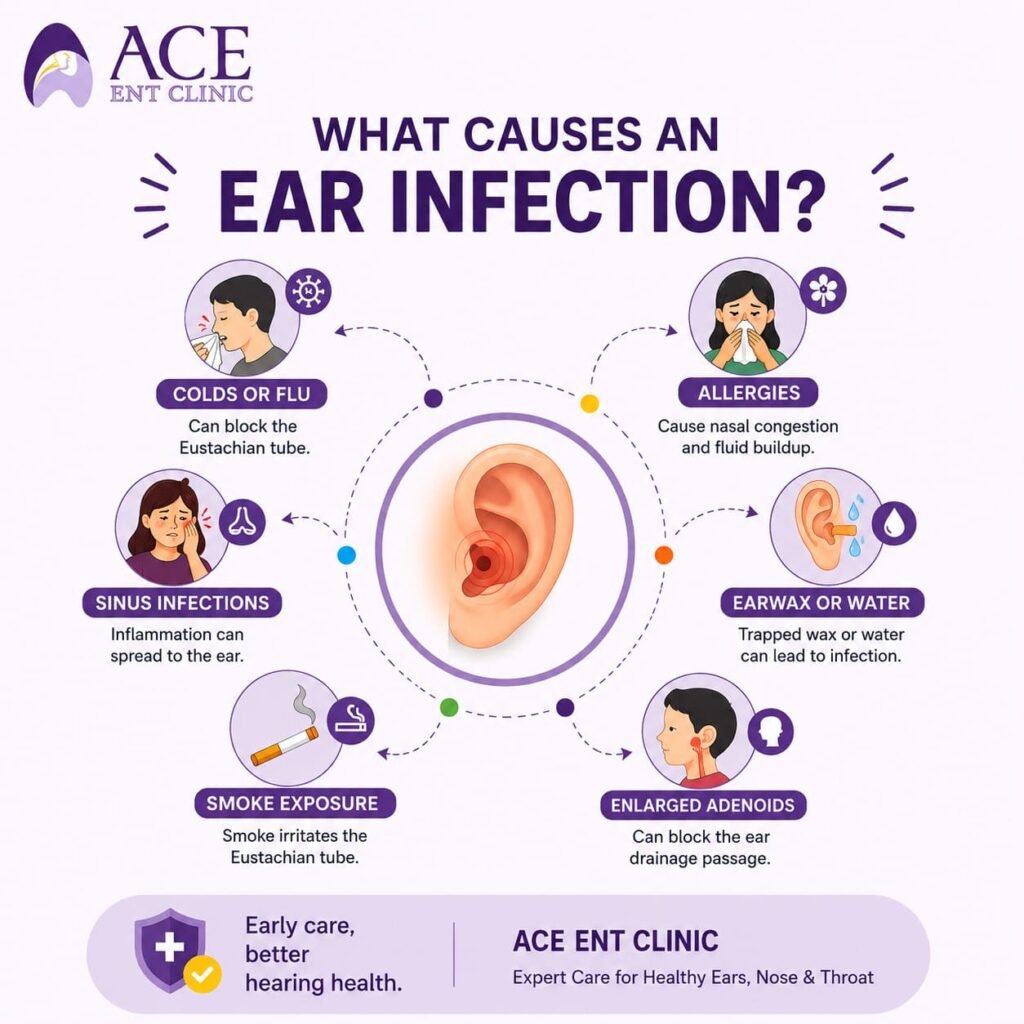
Several factors disrupt normal ear drainage and ventilation, leading to infection. Common ear infection causes include:
- Upper respiratory infections like colds or flu, which cause throat and nasal swelling that blocks the Eustachian tube
- Allergies that lead to nasal congestion and fluid buildup
- Sinus infections that spread inflammation toward the ear
- Excess earwax or water trapped in the ear canal, especially after swimming or showering
- Smoking or secondhand smoke exposure, which irritates the Eustachian tube lining
- Enlarged adenoids (more common in children), which can physically block ear drainage
- Sudden altitude or air pressure changes, such as during flights
Is an Ear Infection Viral or Bacterial?
An ear infection can be either viral or bacterial, and the cause directly affects treatment. Viral ear infections often follow a cold and tend to improve on their own within a few days. Bacterial ear infections usually cause more intense pain, higher fever, and may require antibiotics if they don’t improve within 48–72 hours.
👂 Viral Ear Infection vs 🦠 Bacterial Ear Infection
An ENT specialist can examine the eardrum with an otoscope to determine the exact cause. Self-diagnosis based on symptoms alone isn’t always reliable, especially in adults, where complications can be more serious.
Symptoms of Ear Infection: How They Differ by Age
While the underlying cause is similar, how an ear infection shows up differs significantly between children and adults, largely because children can’t always describe what they’re feeling.
Symptoms in Children
- Pulling or tugging at the ear
- Excessive crying or irritability, especially at night
- Difficulty sleeping due to ear pain
- Reduced appetite or trouble feeding
- Mild fever
- Fluid draining from the ear
- Balance issues or unsteadiness in toddlers
Symptoms in Adults
- Sharp or throbbing ear pain
- A feeling of fullness or pressure in the ear
- Muffled hearing or temporary hearing loss
- Dizziness or a sense of imbalance
- Fluid or discharge from the ear canal
- Pain that radiates toward the jaw, throat, or head
Ear Infection in Adults vs Children: Key Differences
👶 Children vs 👨 Adults
👶 Children
👨 Adults
📊 Frequency
👂 Eustachian Tube Shape
🤧 Common Trigger
⏳ Recovery Time
⚠ Risk Level
🔊 Complication Risk
Treatment Options: From Home Care to Ear Surgery
Most mild ear infections improve with simple care:
- Over-the-counter pain relief (as advised by a doctor)
- Warm compress against the affected ear
- Staying hydrated and resting
- Antibiotics, if a bacterial cause is confirmed
When Should You See an ENT Specialist?
- Ear pain lasting more than 2–3 days
- High fever along with ear pain
- Fluid or pus draining from the ear
- Hearing that seems muffled or reduced
- Repeated ear infections within a short period
- Dizziness or balance problems alongside ear symptoms
Final Thoughts
Ear infections may seem like a minor, self-limiting issue, but the way they present and the risks they carry can differ meaningfully between children and adults. Recognising the early signs, understanding whether the cause is viral or bacterial, and knowing when professional care is needed can prevent complications and protect long-term hearing.
If ear pain, pressure, or recurring infections are affecting you or your child, consulting an experienced ENT specialist ensures the right diagnosis and the right treatment before a simple infection turns into a bigger problem.
Ear Pain That Won’t Go Away? Get the Right Diagnosis.
If you’re looking for an experienced ENT specialist in Ahmedabad, Dr. Simple Bhadania (ACE Neuro ENT Hospital) provides thorough ear evaluations, accurate diagnosis of viral versus bacterial infections, and advanced treatment options including ear surgery when required to protect your long-term hearing health.
✔ Accurate Ear Diagnosis | ✔ Advanced ENT Treatment | ✔ Long-Term Hearing Care
Frequantly Ask Question’s
Do kids get ear infections more than adults?
Yes, children are more likely to develop ear infections than adults, especially those under the age of 6. This happens because a child’s Eustachian tube (the small passage connecting the ear to the throat) is shorter, narrower, and more horizontal, making it easier for fluid to get trapped and bacteria or viruses to grow. Adults can also develop ear infections, but they are generally less frequent than in children.
Can adults catch ear infections from kids?
No, ear infections themselves are not directly contagious. However, the viral or bacterial infections that cause ear infections, such as colds, flu, or throat infections, can spread from one person to another. If an adult catches a respiratory infection from a child, it may lead to inflammation that increases the risk of developing an ear infection.
Can a dirty pillow cause an ear infection?
A dirty pillow usually does not directly cause an ear infection, but poor hygiene can sometimes contribute to irritation or bacterial exposure around the outer ear. Ear infections are more commonly caused by viral infections, bacteria, allergies, sinus problems, trapped moisture, or blocked ear drainage pathways. Regularly washing pillow covers and maintaining hygiene can help reduce unnecessary bacterial exposure.
Should I keep my daughter home if she has an ear infection?
If your child has an ear infection along with fever, severe ear pain, poor sleep, irritability, or general weakness, it is better to keep them home and allow proper rest. If the child feels active and symptoms are mild, returning to school may be fine after medical evaluation. If the infection is linked to a contagious illness like a cold or flu, staying home helps prevent spreading the underlying infection to others.
What is a stage 3 ear infection?
A stage 3 ear infection generally refers to an advanced stage where pressure from fluid buildup behind the eardrum becomes severe and may cause significant pain, hearing loss, swelling, or even rupture of the eardrum. At this stage, fluid or pus may drain from the ear, and immediate medical attention is recommended. Delaying treatment can increase the risk of hearing damage or complications that may require Ear Surgery.
What vitamins help prevent ear infections?
Certain vitamins can help strengthen the immune system and may reduce the risk of frequent infections, including ear infections. These include:
- Vitamin C supports the immune defence against viral infections
- Vitamin D helps regulate immune system function
- Vitamin A supports healthy mucous membranes in the ear and respiratory tract
- Zinc helps the body fight bacterial and viral infections
- Omega-3 fatty acids may help reduce inflammation in the body