


By Dr. Simple Bhadania, MS ENT | Neuro-Otology and Skull Base Surgeon, ACE Neuro ENT Hospital, Nava Vadaj, Ahmedabad
You lie down at night, the room goes quiet, and a thump or whoosh in your ear keeps time with your pulse. Hearing heartbeat in ear is called pulsatile tinnitus. Most causes are treatable, such as anemia, high blood pressure or fluid behind the eardrum. A smaller group involves blood vessels near the skull base and needs a scan.
This guide explains what the sound means, which causes are harmless, and which signs mean you should see an ENT specialist in Ahmedabad soon.
- What it is: A rhythmic sound that matches your pulse.
- Is it dangerous? Often not, but a minority of cases involve blood vessels, so it needs an evaluation.
- How it is checked: Ear exam, hearing test, blood pressure, blood tests, then MRI/MRA or CT angiography if needed.
- Can it go away? Yes, often when the cause is treated.
What Does a Heartbeat Sound in Your Ear Actually Mean?
A heartbeat sound in the ear means you are hearing blood flow near your ear, not a sound from outside. It usually beats with your pulse and can feel like a thump, a swish or a whooshing sound in the ear.
Your inner ear sits right next to the carotid artery and the jugular vein. Normally, background noise hides that blood flow. When the flow gets louder, or your ear becomes more sensitive to it, you start to hear it.
| Feature | Pulsatile tinnitus | Regular tinnitus |
| Sound | Thump or whoosh in time with pulse | Steady ring, hiss or buzz |
| Usual source | Blood flow, or a vessel or bone change | Inner ear or nerve changes |
| Scan needed? | Often | Mainly if one-sided or with hearing loss |
| How common | Less common | Very common |
If your sound is a steady ring, hiss or buzz with no pulse in it, that is regular tinnitus. Our guide on tinnitus causes, symptoms and treatment explains that type in detail.
What Are the Main Pulsatile Tinnitus Causes?
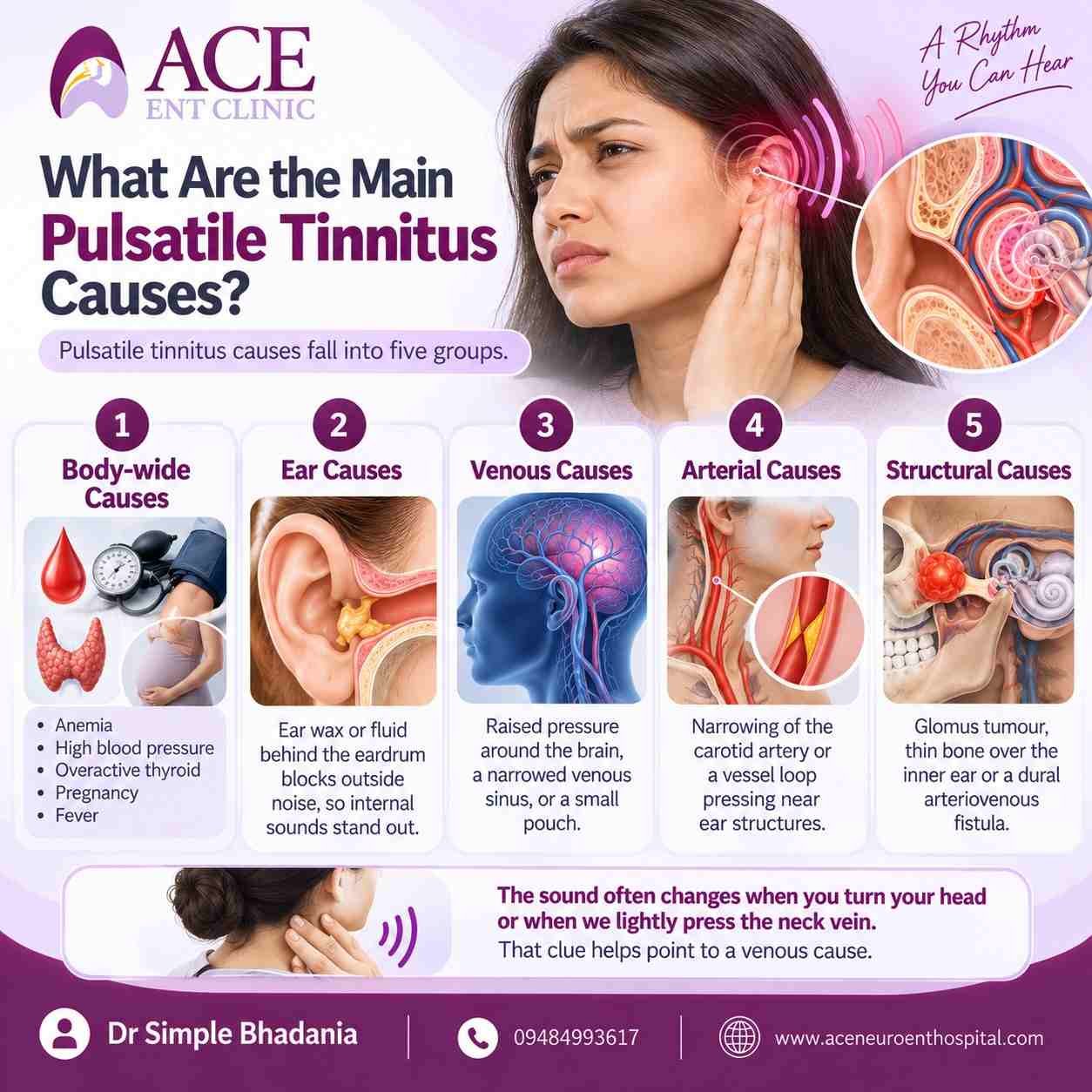
Pulsatile tinnitus causes fall into five groups. Most are common and fixable.
- Body-wide causes: Anemia, high blood pressure, an overactive thyroid, pregnancy and fever all speed up blood flow and make it louder.
- Ear causes: Ear wax or fluid behind the eardrum blocks outside noise, so internal sounds stand out.
- Venous causes: Raised pressure around the brain (idiopathic intracranial hypertension), a narrowed venous sinus, or a small pouch in the sigmoid sinus wall. Imaging literature describes idiopathic intracranial hypertension as the most common cause of venous pulsatile tinnitus.
- Arterial causes: Narrowing of the carotid artery, or a vessel loop pressing near ear structures.
- Structural causes: A glomus tumour (a vascular growth near the ear), thin bone over the inner ear (superior canal dehiscence), or a dural arteriovenous fistula, which is an abnormal artery-to-vein connection.
We often check whether the sound changes when you turn your head or when we lightly press the neck vein. That clue helps point to a venous cause.
Why Do You Hear a Heartbeat in One Ear or Only When Lying Down?
A heartbeat sound in one ear usually means the cause sits on that side. It could be a narrowed vein, a sinus pouch or fluid in that middle ear. One-sided pulsatile tinnitus is the pattern that most often leads to scans.
Heartbeat in ear when lying down has simpler reasons:
- The room is quiet, so the sound stands out.
- Lying flat increases blood return to the head and can raise pressure around the brain.
- A pillow blocks outside noise on the ear you sleep on.
If the sound fades when you sit up, tell your doctor. It is a useful clue.
Many patients in Ahmedabad tell us they first notice it in a silent, air-conditioned bedroom after a long day, and assume it is stress. Stress can make it louder, but it rarely explains it fully.
What Are the Pulsatile Tinnitus Symptoms?
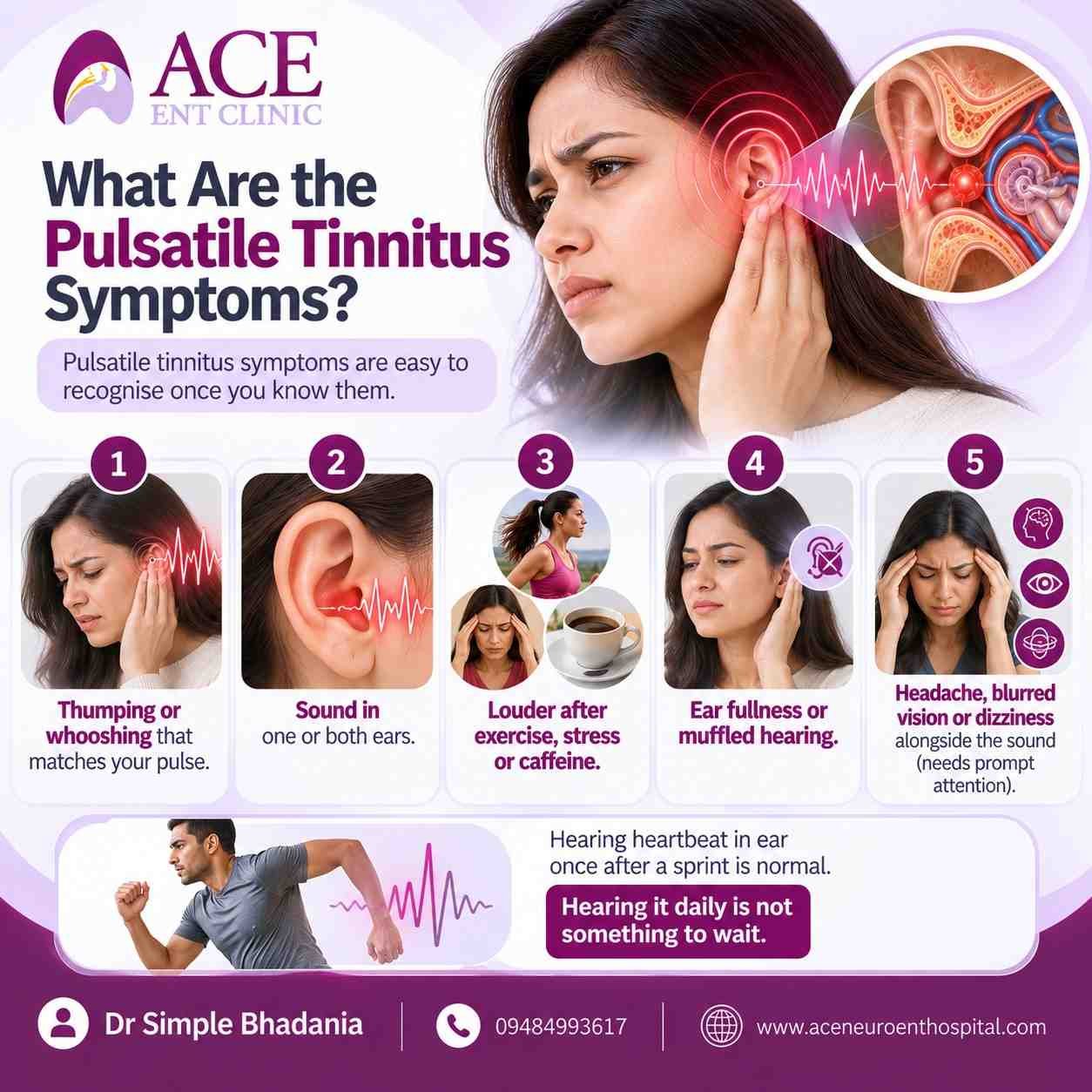
Pulsatile tinnitus symptoms are easy to recognise once you know them:
- Thumping or whooshing that matches your pulse
- Sound in one or both ears
- Louder after exercise, stress or caffeine
- Ear fullness or muffled hearing
- Headache, blurred vision or dizziness alongside the sound (these need prompt attention)
Hearing heartbeat in ear once after a sprint is normal. Hearing it daily is not something to wait out.
Is Pulsatile Tinnitus Dangerous?
Pulsatile tinnitus is not always dangerous, but it should not be brushed off. Most causes are harmless or easy to treat. Rarely, it is a warning sign of serious vascular problems, and specialist reviews note it can precede conditions such as stroke or vision loss.
| Situation | What to do |
| Brief, mild, only after exercise or fever | Monitor; see a doctor if it persists |
| Lasts more than 2 weeks, one-sided, or with hearing loss | Book an ENT visit soon |
| With headache, blurred vision, dizziness or after a head injury | Get checked within days |
| Sudden facial or limb weakness, slurred speech, severe sudden headache, sudden vision loss | Go to an emergency department now |
How Is It Diagnosed? When Is a Pulsatile Tinnitus MRI Needed?
Diagnosis follows a simple order:
- History and ear exam: We check the eardrum and listen for a sound others can hear.
- Hearing test: An audiogram shows whether hearing loss is present.
- Blood pressure and blood tests: Haemoglobin and thyroid levels. Anemia is common in India, so we check early.
- Imaging: Only when the history or exam points to it.
A pulsatile tinnitus MRI with MR angiography is increasingly preferred as the first scan. It avoids radiation and can detect serious vascular and venous causes. A 2025 review in the Journal of NeuroInterventional Surgery recommends MRI/MRA first, with CT angiography when MRI is not possible.
The best scan still depends on your symptoms. One systematic review found CT angiography identified a cause more often (about 86%) than MRI/MRA (about 58%). Dr. Simple Bhadania neuro-otology and skull base training matters here. The sound can start in the bone behind the ear, so we read the ear and skull base together instead of treating them as separate problems
What Is the Pulsatile Tinnitus Treatment? Can It Go Away?
Yes, pulsatile tinnitus can go away when the cause is found and treated. Treatment targets the cause, not the sound itself. Results vary, and some people need long-term management.
- Anemia, thyroid or blood pressure: Treating the condition often settles the sound.
- Ear wax or middle ear fluid: Cleaning or treating the ear.
- Raised brain pressure: Weight management, medicines, and sometimes venous stenting by a specialist team.
- Sinus pouch or thin bone: Surgical repair in selected patients.
- Fistula or glomus tumour: Endovascular treatment or skull base surgery with a multidisciplinary team.
- No cause found: Sound therapy, sleep strategies and counselling to reduce distress.
Stenting and surgery carry risks. We discuss them openly before any decision.
Conclusion
Hearing heartbeat in ear can feel alarming at 2 a.m., but most causes are treatable. The first step is simple: get examined.
Anemia, high blood pressure, ear wax and fluid behind the eardrum are common and fixable. A smaller group involves blood vessels near the skull base, and those need the right scan at the right time. Pulsatile tinnitus that is one-sided, constant, or comes with headache, vision changes or hearing loss should not be left to settle on its own. A proper check usually gives you a clear answer, and often a clear plan.
Book Your Ear Check-Up
Is a pulse-like sound in your ear keeping you awake? Let our team find the cause. At ACE Neuro ENT Hospital, Dr. Simple Bhadania will examine your ears, arrange a hearing test, and guide you on whether you need an MRI or other scans.
Frequently Asked Questions
Why do I hear my heartbeat in my ear at night?
The room is quiet and you are lying flat, so blood flow near the ear is easier to notice. If it happens every night for more than two weeks, get it checked.
Is hearing a heartbeat in the ear a sign of high blood pressure?
It can be. High blood pressure, anemia and thyroid problems all increase blood flow noise. A blood pressure reading is one of the first checks.
Can pulsatile tinnitus go away on its own?
Sometimes, especially when linked to fever, pregnancy or temporary wax or fluid. If it lasts beyond two weeks, an evaluation is safer than waiting.
Does a whooshing sound in the ear always need an MRI?
No. Many people need only an ear exam, hearing test and blood work. Scans are advised for one-sided, persistent or worrying symptoms.
Which doctor should I see for a heartbeat sound in the ear?
Start with an ENT specialist. If a vascular cause is suspected, we involve a radiologist or neurointerventional team.
Medical note: This article is for information only and is not medical advice. Please consult a qualified doctor for diagnosis and treatment.