

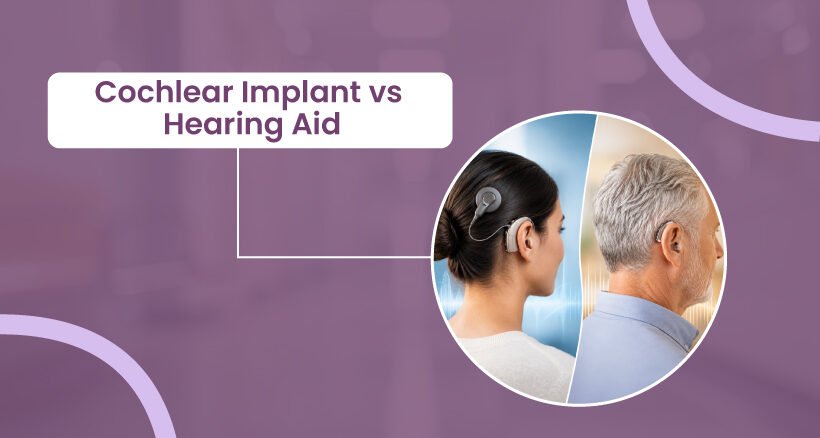
Hearing loss can affect communication, confidence, and overall quality of life. Many people searching for treatment options often compare cochlear implants vs hearing aids to understand which solution is best for their condition.
Although both devices help improve hearing, they work in very different ways. Hearing aids amplify sound and are commonly used for mild to moderate hearing loss, while cochlear implants bypass damaged parts of the inner ear and directly stimulate the auditory nerve, making them suitable for severe to profound hearing loss.
Understanding the difference between a cochlear implant and a hearing aid can help patients and families make informed treatment decisions. In this guide, we explain how both devices work, their benefits, limitations, costs, and who may benefit most from each option.
Cochlear Implant vs Hearing Aid: Quick Comparison
| Feature | Hearing Aid | Cochlear Implant |
|---|---|---|
| Type | External hearing device | Surgically implanted device |
| Best For | Mild to moderate hearing loss | Severe to profound hearing loss |
| How It Works | Amplifies sound | Stimulates auditory nerve directly |
| Surgery Required | No | Yes |
| Sound Quality | Louder sound | Better speech clarity |
| Cost | Lower | Higher |
| Recovery Time | None | Few weeks after surgery |
| Maintenance | Battery and cleaning required | Rehabilitation and follow-up needed |
What Is the Difference Between a Cochlear Implant and a Hearing Aid?
Understanding the difference between cochlear implants and hearing aids is important before choosing the right hearing solution.
Hearing Aid
A hearing aid is a small electronic device worn inside or behind the ear. It helps people hear better by amplifying sounds from the environment.
A hearing aid works by:
- Picking up sound through a microphone
- Amplifying the sound
- Delivering louder sound into the ear canal
Hearing aids are commonly recommended for people with mild to moderate hearing loss who can still process sound naturally through the inner ear.
Benefits of Hearing Aids
- Non-surgical treatment option
- Easy to use and maintain
- Improves communication in daily life
- More affordable compared to implants
- Suitable for early stages of hearing loss
Cochlear Implant
A cochlear implant is an advanced hearing device that is surgically placed inside the ear. Unlike hearing aids, cochlear implants do not simply make sounds louder. Instead, they bypass damaged parts of the inner ear and directly stimulate the auditory nerve.
A cochlear implant works by:
- Capturing sound through an external processor
- Converting sound into digital signals
- Sending signals to an implanted receiver
- Stimulating the auditory nerve directly
The brain then interprets these signals as sound.
Cochlear implants are mainly recommended for people with severe or profound hearing loss who receive little benefit from hearing aids.
Who Should Choose a Hearing Aid?
A hearing aid is usually recommended if:
- Hearing loss is mild to moderate
- Speech can still be understood with amplification
- The cochlea is functioning properly
- Daily communication improves with louder sound
Many patients prefer hearing aids because they are non-invasive, affordable, and easy to adapt to.
Who Is a Candidate for Cochlear Implant Surgery?
A cochlear implant may be advised if:
- Hearing loss is severe to profound
- Hearing aids do not provide enough clarity
- Understanding speech becomes difficult even with amplification
- Communication problems affect daily life significantly
Patients with severe hearing loss often experience better speech understanding and improved quality of life after cochlear implant surgery.
Early evaluation is especially important for children because timely treatment can support speech and language development.
How Do Cochlear Implants and Hearing Aids Work Differently?
One of the biggest differences in cochlear implant vs hearing aid is how they process sound.
How Hearing Aids Work
- Collect sounds from the environment
- Amplify the sounds
- Send louder sounds through the ear canal
- Depend on natural hearing ability
How Cochlear Implants Work
- Capture sound externally
- Convert sound into electrical signals
- Bypass damaged hearing structures
- Directly stimulate the auditory nerve
In simple terms, hearing aids make sound louder, while cochlear implants make sound clearer for people with severe hearing damage.
Benefits of Hearing Aids
Hearing aids provide several advantages for people with early or moderate hearing loss.
Key Benefits
- Non-surgical solution
- Lower cost compared to implants
- Quick adjustment period
- Portable and easy to maintain
- Improves hearing in quiet environments
Modern digital hearing aids also include advanced features such as noise reduction and Bluetooth connectivity.
Benefits of Cochlear Implants
Cochlear implants can significantly improve hearing ability in people who struggle even with powerful hearing aids.
Key Benefits
- Better speech clarity
- Improved communication in noisy environments
- Enhanced social interaction
- Long-term hearing improvement
- Better quality of life
Many patients report improved confidence and communication after cochlear implant surgery, especially in conversations where hearing aids previously failed to provide enough clarity.
Risks and Limitations
Hearing Aid Limitations
Although hearing aids are highly effective for many people, they may have limitations such as:
- Reduced effectiveness in severe hearing loss
- Difficulty hearing in noisy places
- Need for regular battery replacement
- Ongoing maintenance and adjustments
Cochlear Implant Considerations
Cochlear implants are highly advanced devices, but they also involve:
- Surgical procedure
- Recovery period
- Hearing rehabilitation and training
- Higher overall cost
However, modern cochlear implant technology has become safer and more successful over the years.
Cochlear Implant vs Hearing Aid Cost in India
Cost is an important factor when comparing cochlear implants and hearing aids.
Hearing Aid Cost
Hearing aids in India generally range from:
- ₹20,000 to ₹2,00,000
The price depends on:
- Technology level
- Brand
- Digital features
- Custom fitting
Cochlear Implant Cost
Cochlear implant surgery in India may range from:
- ₹6,00,000 to ₹15,00,000
This usually includes:
- Device cost
- Surgery charges
- Hospital expenses
- Rehabilitation sessions
Although cochlear implants are more expensive, they can provide life-changing benefits for people with severe hearing loss.
How to Decide Between a Cochlear Implant and a Hearing Aid
Choosing the right treatment requires professional hearing evaluation.
Step-by-Step Decision Guide
- Undergo a complete hearing test
- Try hearing aids if recommended
- Assess improvement in speech clarity
- Consult an ENT specialist
- Consider cochlear implant evaluation if hearing aids are ineffective
A proper diagnosis helps determine the most suitable hearing solution for each patient.
When Should You Consult an ENT Specialist?
You should consult a hearing specialist if you notice:
- Difficulty hearing conversations
- Frequently asking others to repeat words
- Trouble hearing during phone calls
- Increasing television volume often
- Hearing aids no longer improving communication
Early diagnosis and treatment can significantly improve hearing outcomes in both adults and children.
Reviewed By Dr. Simple Bhadania
Dr. Simple Bhadania is an experienced ENT specialist in Ahmedabad with expertise in hearing loss treatment, cochlear implant evaluation, and ear-related disorders. She has helped patients with mild to profound hearing loss choose appropriate hearing solutions through advanced diagnosis and personalized treatment plans.
Conclusion
When comparing cochlear implant vs hearing aid, the right choice depends on the severity of hearing loss and how effectively sound can still be processed by the inner ear.
Hearing aids are usually the best option for mild to moderate hearing loss because they amplify sounds and improve daily communication without surgery. Cochlear implants, on the other hand, are designed for people with severe to profound hearing loss who receive limited benefit from hearing aids.
If hearing difficulties are affecting your communication or quality of life, seeking early evaluation from an experienced ENT specialist can help determine the most suitable treatment option. Timely intervention often leads to better hearing improvement and a more confident lifestyle. Consult Dr. Simple Bhadania today to understand whether a hearing aid or cochlear implant is the right solution for your hearing needs. Early treatment can make communication easier, improve confidence, and enhance overall quality of life.