

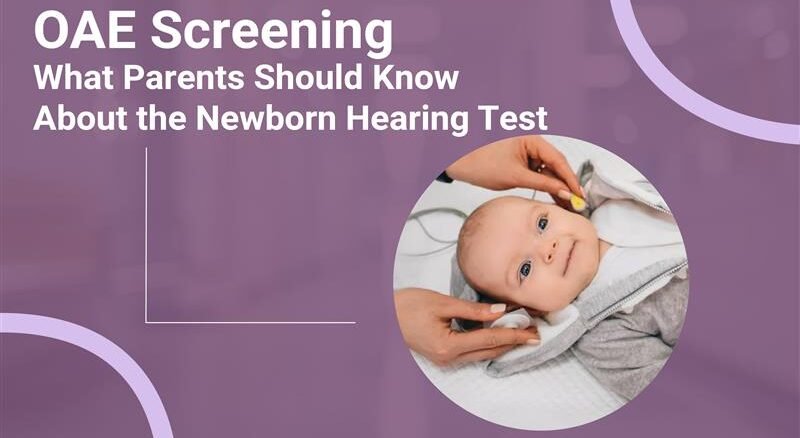
Welcoming a newborn is one of the happiest moments for any parent. Along with checking the baby’s heartbeat, weight, and general health, one more important test is done soon after birth the OAE screening, also known as the OAE hearing test.
This simple and quick test helps detect hearing problems early, so your baby gets the right care and support during their growing years. Early detection is crucial because hearing plays a major role in speech, brain development, and learning.
In this expert guide, we explain what OAE screening means, how it works, why it is important, and what parents can expect in simple, friendly, and reassuring language. Insights from ENT specialists in Ahmedabad, like Dr Simple Bhadania will help you feel confident about your baby’s hearing health.
What is OAE Screening and How Does It Work?
OAE screening stands for Otoacoustic Emissions screening. It is a newborn hearing test that checks how well the inner ear (cochlea) responds to sound.
When sound enters a healthy ear, the tiny hair cells inside the cochlea produce vibrations (called emissions). These emissions can be recorded and measured.
How the OAE Hearing Test Works:
The process is completely painless and takes only a few minutes.
- A small, soft ear probe is gently placed in the baby’s ear.
- Soft clicking sounds are played.
- A computer measures how the ear responds.
- If emissions are present → hearing is normal.
- If emissions are absent → further testing is recommended.
Important:
- The test does not hurt.
- No injections, no loud noises, no discomfort.
- Babies usually sleep through the screening.
Specialists like Dr Simple Bhadania recommend the test for every newborn, even if there is no family history of hearing loss.
Why is the OAE Hearing Test Important for Newborns?
Many parents assume that if a baby reacts to loud noises, hearing is normal. But mild or partial hearing loss often goes unnoticed.
Early detection helps in early treatment, which is essential because:
- Hearing supports brain development: During the first three years, the brain grows rapidly. Hearing plays a big role in speech, social skills, and learning.
- Delayed diagnosis can affect speech: Babies with untreated hearing loss may learn to speak late or have unclear speech.
- Treatment works best when started early: Studies show that children diagnosed before 6 months have much better outcomes.
- It gives parents peace of mind: Knowing that your baby’s hearing is healthy is reassuring.
According to experts such as Dr. Simple Bhadania, an OAE hearing test helps avoid future developmental delays and ensures healthy growth.
How is OAE Screening Done in Hospitals?
Most hospitals perform OAE screening before the baby is discharged. It takes just 5–10 minutes and can be done while the baby is sleeping or feeding.
Step-by-Step Process
- Baby is kept in a quiet room.
- A small probe is placed in one ear.
- Soft tones are played.
- The device measures the inner-ear response.
- The process is repeated in the other ear.
- Immediate report: “Pass” or “Refer”.
What Does “Pass” or “Refer” Mean?
- Pass: Normal hearing response.
- Refer: Baby needs further testing, not necessarily hearing loss; sometimes due to earwax, fluid, or noise.
What are the Benefits of OAE Screening?
Parents love the OAE hearing test because it is:
- Quick: It takes only a few minutes.
- Accurate: Detects even mild hearing issues.
- Completely safe: No radiation, no pain, no side effects.
- Baby-friendly: Works even while the baby sleeps.
- Helps early intervention: Allow timely treatment if needed.
Which Babies Need OAE Screening the Most?
While OAE is recommended for all newborns, some babies have a higher risk of hearing loss:
- Premature babies
- Babies with low birth weight
- Babies who stayed in NICU
- Family history of childhood hearing loss
- Complications during pregnancy
- Babies with jaundice requiring treatment
- Exposure to certain medications
If your baby belongs to any of these categories, the OAE hearing test becomes even more important.
Common Mistakes Parents Make (and How to Avoid Them)
- Assuming the baby can hear because they react to noise: Reactions don’t confirm full hearing ability. Only proper screening can.
- Ignoring a “Refer” result: A referral doesn’t mean permanent hearing loss. But repeat testing is necessary.
- Delaying follow-up tests: The earlier the diagnosis, the better the treatment outcomes.
- Thinking hearing loss cannot be treated: Modern treatments, hearing aids, and therapy help children live normal lives.
Cost for OAE Screening
Parents often wonder about the cost. Although the exact price varies by hospital and city, here’s a general breakdown:
| Component | Approximate Cost |
| OAE Hearing Test | ₹500 – ₹1500 |
| Repeat Test | ₹300 – ₹1000 |
| Advanced ABR Test (if needed) | ₹2000 – ₹5000 |
Most hospitals include the test in newborn packages
Checklist for Parents Before OAE Screening
Use this simple checklist before taking your newborn for the test:
- Baby is calm or sleeping
- Ear is clean (doctor will guide you)
- Feed the baby before the test
- Remove any caps or mufflers covering the ears
- Ensure the room is quiet
- Ask when to collect the report
Conclusion
OAE screening is one of the most important early tests for your newborn. It ensures your baby’s hearing is developing normally and helps detect issues early. The test is quick, safe, accurate, and painless.
Experts like Dr. Simple Bhadania strongly advise parents to get it done as part of the newborn health checklist. Early detection leads to early treatment, giving your child the best start in life.
If you want expert guidance on your baby’s hearing health or need OAE screening or further evaluation, book an appointment with Dr Simple Bhadania today. Early care ensures lifelong healthy development.
FAQs
No. It is completely painless and non-invasive.
Do not panic. Many babies get a “Refer” result due to fluid or earwax. Your doctor will repeat the test.
Yes, sometimes it is due to fluid in the middle ear or infection. Temporary issues are often resolved with treatment.
Ideally, within 24–48 hours of birth.
It is highly accurate for detecting early hearing issues.
Consult a specialist immediately. Hearing issues can develop later due to infections, illness, or injury.
If the doctor recommends, yes, especially for babies in high-risk categories.