

Hearing plays a crucial role in a child’s speech, learning, and overall development. When a baby does not respond to sounds or shows delayed speech, doctors often recommend a BERA hearing test, one of the most reliable methods to detect hearing issues early. Many parents are unsure about what the test means, how it is performed, and how to understand BERA waves and their interpretation.
In this complete guide, you will learn what the BERA test is, how it works, its importance for babies, the meaning of BERA waves, the BERA test normal range, and how doctors interpret the results. According to hearing specialist Dr Simple Bhadania, early assessment through BERA helps diagnose hearing loss at the right time and supports better speech development.
What is the BERA Test? (Brainstem Evoked Response Audiometry)
The BERA test, or Brainstem Evoked Response Audiometry, is a special hearing test that evaluates how sound travels from the ear to the brainstem. Unlike regular hearing tests, the BERA test does not require the child or patient to respond.
That’s why the BERA test for babies and young children is considered the gold standard for accurate hearing assessment.
What Does the BERA Test Check?
- The function of the auditory nerve
- The brainstem’s response to sound
- Delay or blockage in the hearing pathway
- Type and degree of hearing loss
How Does the BERA Hearing Test Work?
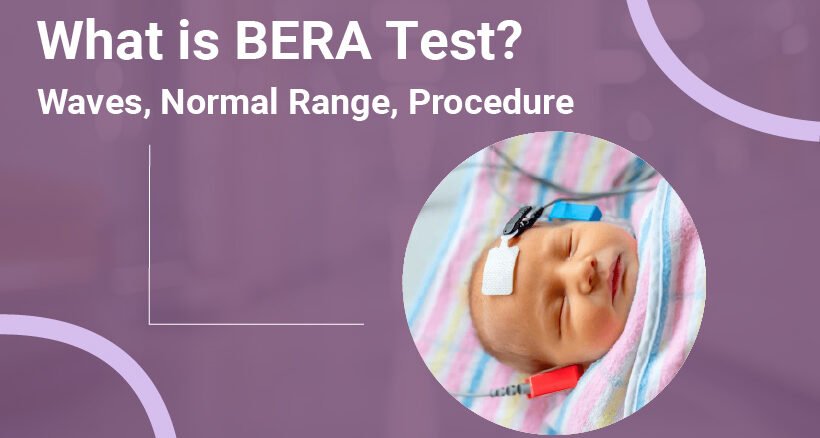
The BERA test uses clicking sounds or tone bursts delivered through earphones. These sounds activate the hearing nerve. Electrodes placed on the scalp then record how the brainstem reacts.
Step-by-Step BERA Test Procedure
1. Preparation
- Baby should be calm or asleep.
- Mild sedation may be used only if necessary.
- Skin is gently cleaned before placing electrodes.
2. Electrode Placement
Electrodes are placed on:
- Forehead
- Behind both ears
These capture the brain’s electrical activity in response to sound.
3. Earphones Deliver Sound
Soft clicking or beeping sounds enter the ear. The brainstem reacts instantly.
4. Recording BERA Waves
The computer displays responses as BERA waves, which help doctors determine nerve and hearing function.
5. Duration
The test typically takes 45–60 minutes, depending on the child’s cooperation and sleep.
Is the BERA Test Safe for Babies?
Yes. The BERA test is:
- Completely safe
- Painless
- Non-invasive
- Free from radiation
- Suitable for newborns, infants, children, and adults
Since babies don’t need to respond, the BERA hearing test is considered the most accurate tool for early detection of hearing loss.
Who Should Undergo a BERA Hearing Test?
Doctors recommend the BERA test in cases such as:
- Newborn failing initial hearing screening
- Baby not responding to sounds
- Delayed speech development
- Frequent ear infections
- Suspected nerve-related hearing loss
- Unexplained dizziness or balance issues
- Family history of hearing impairment
Early diagnosis allows for timely treatment, hearing aid fitting, or speech therapy, improving long-term outcomes.
What are BERA Waves? (BERA Waves Interpretation)
During the BERA hearing test, the computer generates a series of waves. Each wave represents how sound travels from different parts of the auditory nerve to the brainstem. Understanding BERA waves interpretation is essential for identifying the location and severity of hearing loss.
The Five Major BERA Waves
- Wave I – Auditory nerve response
- Wave II – Cochlear nucleus
- Wave III – Superior olivary complex
- Wave IV – Lateral lemniscus
- Wave V – Inferior colliculus (most important wave for hearing threshold)
Wave V is used most commonly to determine the minimum sound level the patient can hear.
What Does an Abnormal BERA Wave Pattern Mean?
Abnormalities in wave shape, timing, or absence of waves may indicate:
- Sensorineural hearing loss
- Conductive hearing loss
- Auditory neuropathy
- Delayed nerve conduction
- Brainstem disorders
Interpeak latency (time between Waves I, III, and V) also helps determine nerve-related problems.
BERA Test Normal Range (Wave Latencies)
The BERA test normal range refers to the standard timing and presence of Waves I, III, and V.
Normal BERA Test Findings
- All waves appear clearly
- Latency values are within expected range
- Interpeak intervals are normal
- Wave V remains visible even at softer sound levels
Typical Normal Latency Ranges (Approximate)
- Wave I: 1.4–1.8 ms
- Wave III: 3.2–3.8 ms
- Wave V: 5.4–6.0 ms
(Note: Newborns may show slightly longer latency due to developing nerve pathways.)
If waves are delayed, missing, or distorted, it may indicate hearing loss or nerve pathway issues. BERA test interpretation must always be done by a trained audiologist or ENT specialist.
Benefits of the BERA Test
1. Highly Accurate for Babies and Children
No active response is required, making results reliable even for sleeping infants.
2. Detects Nerve-Related Hearing Loss
Identifies issues regular hearing tests may miss.
3. Enables Early Intervention
Early detection helps begin treatment or speech therapy sooner.
4. Safe and Non-Invasive
No pain or discomfort during the procedure.
5. Useful for Adults Too
Helps diagnose tinnitus, auditory neuropathy, and neurological conditions.
When Should Parents Consult a doctor?
Seek help immediately if your child:
- Does not react to loud sounds
- Has delayed speech
- Frequently gets ear infections
- Fails the newborn hearing screening
- Shows signs of hearing difficulty
According to Dr Simple Bhadania, early testing ensures better speech and brain development in young children.
Conclusion
The BERA hearing test is one of the most advanced and accurate methods to evaluate hearing function, especially in newborns and infants. By understanding what the BERA test is, how the waves work, and the BERA test normal range, parents can feel confident and informed about their child’s hearing health.
Painless, safe, and scientifically reliable, the BERA test plays a crucial role in early diagnosis and timely treatment. If you notice signs of hearing delay or unresponsiveness, do not wait, consult an audiologist or ENT expert like Dr Simple Bhadania for proper evaluation.