

- May 26, 2026
- Dr. Simple Bhadania
- Comment: 0
- blog, ENT Specialist, Throat
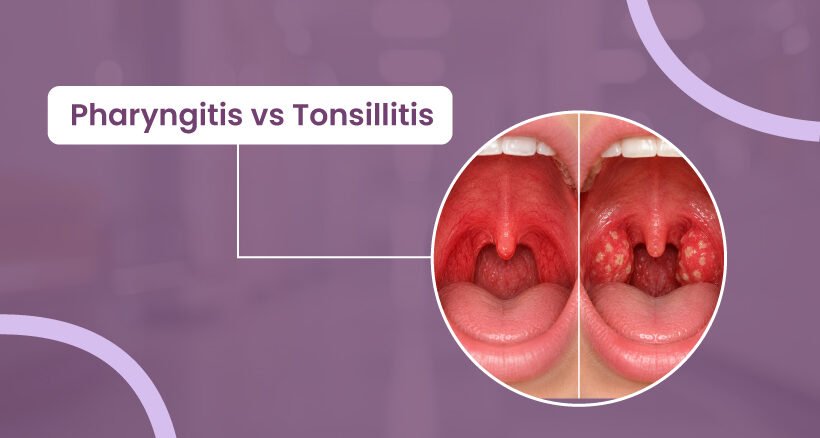
Pharyngitis and tonsillitis are both common throat infections that can cause sore throat, fever, and difficulty swallowing. The main difference is the affected area. Pharyngitis affects the back of the throat (pharynx), while tonsillitis affects the tonsils. Tonsillitis often causes swollen tonsils with white patches, whereas pharyngitis mainly causes throat irritation and pain.
What Is the Difference Between Pharyngitis and Tonsillitis?
Many people confuse pharyngitis and tonsillitis because the symptoms are very similar. Both conditions may develop due to viral or bacterial infections and can affect children as well as adults. However, understanding the difference between pharyngitis vs tonsillitis helps patients seek the right treatment early and avoid complications.
| Feature | Pharyngitis | Tonsillitis |
|---|---|---|
| Affected Area | Back of the throat (pharynx) | Tonsils |
| Main Symptom | Scratchy or painful throat | Swollen tonsils |
| White Patches | Rare | Common |
| Difficulty Swallowing | Mild to moderate | Moderate to severe |
| Fever | Mild | Often high |
| Common Cause | Viral infection | Viral or bacterial infection |
| Bad Breath | Less common | More common |
| Treatment | Rest and supportive care | Medicines or surgery in severe cases |
In some patients, pharyngitis and tonsillitis may occur together because infections can spread to nearby throat tissues.
According to ENT Specialist in Ahmedabad, Dr. Simple Bhadania, early diagnosis is important because untreated throat infections may sometimes lead to complications such as ear infections, breathing difficulty, or abscess formation.
What Is Pharyngitis?
Pharyngitis refers to inflammation of the pharynx, which is the back part of the throat. It is commonly known as a sore throat and is usually caused by viral infections such as the common cold or flu.
Common Symptoms of Pharyngitis
- Scratchy throat
- Pain while swallowing
- Dry throat
- Mild fever
- Runny nose
- Sneezing
- Cough
- Hoarseness
Most cases of viral pharyngitis improve within a few days with proper rest and hydration.
What Is Tonsillitis?
Tonsillitis is the inflammation of the tonsils, which are two soft tissue structures located at the back of the throat. Tonsillitis is common in children but can also affect adults.
Common Symptoms of Tonsillitis
- Swollen red tonsils
- White or yellow patches on the tonsils
- Severe throat pain
- Fever
- Swollen lymph nodes in the neck
- Difficulty swallowing
- Bad breath
Bacterial infections such as Streptococcus are a common cause of tonsillitis.
What Causes Pharyngitis and Tonsillitis?
Pharyngitis and tonsillitis are usually caused by infections that spread through coughing, sneezing, or close contact with infected individuals.
Common Causes of Pharyngitis
- Common cold
- Influenza
- Viral throat infections
- Bacterial throat infections
- Allergies
- Smoke or pollution irritation
Common Causes of Tonsillitis
- Viral infections
- Streptococcal bacterial infection
- Recurrent throat infections
- Weak immunity
- Exposure to infected people
Children, school-going students, and people with weak immune systems are more likely to develop these conditions.
Symptoms of Pharyngitis vs Tonsillitis
Although both conditions share several symptoms, some signs can help differentiate them.
Symptoms More Common in Pharyngitis
- Dry or scratchy throat
- Mild pain while swallowing
- Cough and sneezing
- Mild fever
- Hoarseness
Symptoms More Common in Tonsillitis
- Enlarged tonsils
- White pus spots
- Severe throat pain
- High fever
- Neck swelling
- Bad breath
Some patients may also experience:
- Headache
- Ear pain
- Fatigue
- Loss of appetite
If symptoms continue for more than a few days, medical evaluation is recommended.
How Doctors Diagnose Pharyngitis vs Tonsillitis
Doctors usually diagnose pharyngitis and tonsillitis through physical examination and symptom evaluation.
Diagnostic Methods May Include:
- Throat examination
- Checking swollen tonsils
- Rapid strep test
- Throat culture
- Blood tests in severe infections
Proper diagnosis helps determine whether the infection is viral or bacterial and whether antibiotics are necessary.
Pharyngitis vs Tonsillitis Treatment
Treatment depends on the underlying cause and severity of symptoms.
Home Remedies
Mild viral infections often improve with supportive care, including:
- Warm salt water gargles
- Drinking warm fluids
- Steam inhalation
- Proper hydration
- Adequate rest
- Avoiding spicy or cold foods
Medications
Doctors may prescribe:
- Pain relievers
- Fever medicines
- Anti-inflammatory drugs
- Antibiotics for bacterial infections
Patients should avoid self-medication because unnecessary antibiotic use may delay proper recovery.
Can Tonsillitis Require Surgery?
In some patients, repeated or severe tonsillitis may require surgical removal of the tonsils, known as tonsillectomy.
Tonsil Surgery May Be Recommended If:
- Tonsillitis occurs frequently
- Breathing problems develop
- Sleep gets disturbed
- Swallowing becomes difficult
- Infections do not respond to medicines
Modern ENT treatments have made tonsil surgery safer with faster recovery times.
How Long Does Recovery Take?
Recovery time varies depending on the type and severity of infection.
- Viral pharyngitis usually improves within 5–7 days
- Mild tonsillitis may improve within one week
- Bacterial infections often improve faster after antibiotics
Good hydration, rest, and timely treatment can help speed up recovery.
When Should You See an ENT Specialist?
You should consult an ENT specialist if you experience:
- High fever
- Difficulty swallowing
- Breathing problems
- Symptoms lasting longer than one week
- Recurrent throat infections
- Severe swelling or pus formation
Dr. Simple Bhadania advises patients not to ignore repeated throat infections because untreated infections can affect sleep, eating habits, and overall quality of life.
Emergency Warning Signs
Seek immediate medical care if you develop:
- Severe breathing difficulty
- Inability to swallow fluids
- Dehydration
- Extremely high fever
- Severe neck swelling
- Signs of throat abscess
Prompt treatment helps prevent serious complications.
How Can You Prevent Pharyngitis and Tonsillitis?
Good hygiene and strong immunity are the best ways to reduce the risk of throat infections.
Prevention Tips
- Wash hands regularly
- Avoid sharing utensils
- Stay away from infected individuals
- Drink enough water
- Eat a healthy diet
- Avoid smoking and pollution
- Cover your mouth while coughing or sneezing
Children should also maintain good hygiene habits because throat infections spread easily in schools and crowded places.
Conclusion
Understanding the difference between pharyngitis vs tonsillitis helps patients recognise symptoms early and seek proper treatment. While both conditions can cause sore throat and swallowing difficulty, pharyngitis affects the throat lining, whereas tonsillitis affects the tonsils.
Timely diagnosis, proper medical care, and good hygiene can help prevent complications and support faster recovery. If you experience frequent throat infections, severe throat pain, or persistent fever, consulting an experienced ENT specialist such as Dr. Simple Bhadania can help ensure accurate diagnosis and effective treatment.
FAQs
Is pharyngitis more serious than tonsillitis?
Both conditions can become serious if left untreated. The severity depends on the infection type and overall health condition.
Can pharyngitis and tonsillitis occur together?
Yes, infections can spread to nearby throat tissues, causing both conditions at the same time.
Are antibiotics always required?
No. Antibiotics are only effective for bacterial infections. Viral infections usually improve with supportive care.
Is tonsillitis contagious?
Yes, tonsillitis caused by viral or bacterial infections can spread from person to person.
Can adults get tonsillitis?
Yes. Although more common in children, adults can also develop tonsillitis.
Can pharyngitis turn into tonsillitis?
In some cases, infections affecting the throat may spread to the tonsils and cause tonsillitis.