

- May 22, 2026
- Dr. Simple Bhadania
- Comment: 0
- ENT Specialist
Does your child frequently breathe through the mouth, snore loudly at night, or suffer from repeated colds and nasal blockage? These symptoms may indicate adenoid hypertrophy, a common condition caused by enlarged adenoids. If left untreated, it can affect breathing, sleep quality, hearing, and overall development in children.
If you are searching for the best adenoid hypertrophy treatment in Ahmedabad, early diagnosis and proper ENT care can help prevent long-term complications and improve your child’s quality of life.
Dr. Simple Bhadania, an experienced ENT specialist in Ahmedabad, offers advanced diagnosis and personalised treatment options for adenoid hypertrophy, including both non-surgical management and minimally invasive surgical care.
What Is Adenoid Hypertrophy?
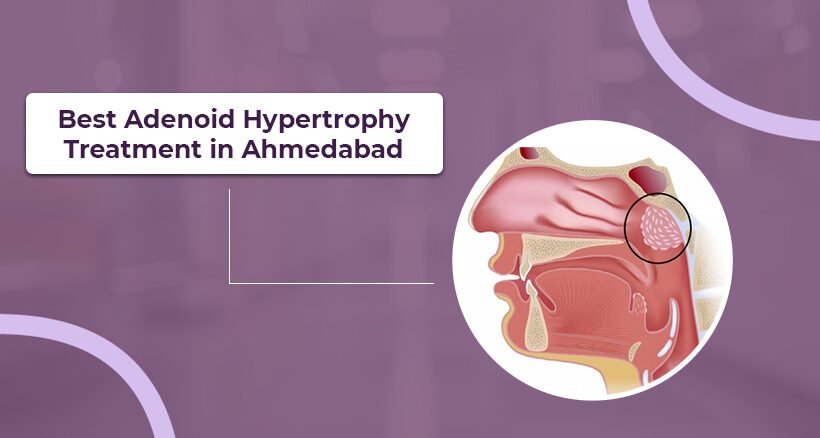
Adenoids are small lymphatic tissues located behind the nose and above the throat. They help the body fight infections during childhood. However, repeated infections, allergies, or inflammation can cause the adenoids to become enlarged, leading to a condition known as adenoid hypertrophy.
Enlarged adenoids can partially block the airway and interfere with normal breathing, especially during sleep.
Adenoid hypertrophy is most commonly seen in children, although adults can occasionally experience the condition due to chronic infections or allergies.
Symptoms of Enlarged Adenoids
The symptoms of adenoid hypertrophy may develop gradually and are often mistaken for common cold or allergy problems.
Common Symptoms Include:
- Persistent blocked or stuffy nose
- Mouth breathing
- Loud snoring during sleep
- Poor sleep quality or disturbed sleep
- Frequent colds or sinus infections
- Nasal voice or speech changes
- Ear infections or hearing difficulties
- Daytime tiredness or irritability
- Sleep apnea in severe cases
Children with enlarged adenoids may also have difficulty concentrating due to poor sleep quality.
Causes of Adenoid Hypertrophy
Several factors can contribute to enlarged adenoids, including:
- Repeated throat or nasal infections
- Allergies and allergic rhinitis
- Chronic sinus infections
- Exposure to dust, pollution, or smoke
- Weak immune response
- Genetic predisposition
In some children, adenoids naturally become enlarged during growth.
When Should You Consult an ENT Specialist?
Not all enlarged adenoids require treatment. However, medical evaluation becomes important when symptoms begin affecting breathing, sleep, hearing, or daily activities.
You should consult an ENT specialist if your child experiences:
- Constant mouth breathing
- Loud and frequent snoring
- Breathing difficulty during sleep
- Repeated ear infections
- Persistent nasal blockage
- Poor sleep or daytime fatigue
- Delayed speech or hearing concerns
Early diagnosis can prevent complications and improve recovery outcomes.
How Is Adenoid Hypertrophy Diagnosed?
An experienced ENT doctor can diagnose adenoid hypertrophy through a detailed clinical evaluation.
Common Diagnostic Methods Include:
- Nasal Endoscopy: A small flexible camera is used to examine the adenoids and airway obstruction.
- X-Ray Examination: A neck X-ray may help assess the size of enlarged adenoids.
- Symptom Assessment: The doctor evaluates sleep quality, breathing patterns, infections, and hearing-related symptoms.
- Sleep Evaluation: In severe cases, sleep studies may be recommended to check for sleep apnea.
Proper diagnosis helps determine whether medical treatment or surgery is the best option.
Best Adenoid Hypertrophy Treatment in Ahmedabad
The treatment approach depends on the severity of symptoms, age of the patient, and degree of airway obstruction.
Treatment options generally include:
- Non-surgical treatment
- Lifestyle and supportive care
- Surgical removal of adenoids (Adenoidectomy)
Adenoid Hypertrophy Treatment Without Surgery
Many mild to moderate cases can be managed successfully without surgery.
Non-Surgical Treatment Options
- Nasal Steroid Sprays: These sprays help reduce inflammation and swelling of the adenoids.
- Antihistamines: Useful when allergies are contributing to nasal blockage and swelling.
- Antibiotics: Prescribed when bacterial infection is present.
- Saline Nasal Irrigation: Helps clear mucus and improve nasal breathing.
- Allergy Management: Avoiding allergens like dust, smoke, and pollution can improve symptoms significantly.
Benefits of Non-Surgical Treatment
- Non-invasive approach
- No hospital admission required
- Effective in early-stage enlargement
- Helps improve breathing and sleep quality
- Suitable for mild symptoms
However, medical treatment may not provide permanent relief in severe cases.
When Is Surgery Necessary?
Surgery may be recommended when enlarged adenoids cause significant breathing obstruction or fail to respond to medicines.
Surgery Is Usually Advised When:
- Breathing difficulty becomes severe
- Sleep apnea develops
- Frequent ear infections occur
- Symptoms persist despite medication
- Hearing problems develop
- Chronic sinus infections continue
Adenoidectomy Surgery
The surgical removal of enlarged adenoids is called adenoidectomy.
It is a safe and commonly performed ENT procedure.
Procedure Details
- Performed under general anaesthesia
- Usually completed within 30–45 minutes
- Minimally invasive technique
- Most patients go home the same day
Advanced surgical methods help reduce discomfort and improve recovery time.
Recovery After Adenoid Surgery
Most children recover quickly after adenoidectomy.
Recovery Timeline
- Mild throat discomfort for a few days
- Soft diet recommended temporarily
- Return to normal activities within 5–7 days
- Improved breathing and sleep often noticed soon after surgery
Following the doctor’s post-operative instructions ensures smooth recovery.
Adenoid Hypertrophy Treatment Without Surgery vs Surgery
| Non-Surgical Treatment | Surgical Treatment |
|---|---|
| Suitable for mild cases | Recommended for severe cases |
| Uses medicines and sprays | Removes enlarged adenoids |
| Temporary symptom control | Long-term relief |
| No hospital stay | Day-care procedure |
| Symptoms may return | Better airway improvement |
An ENT specialist can help determine the most suitable treatment based on the severity of the condition.
Complications of Untreated Adenoid Hypertrophy
Ignoring enlarged adenoids can lead to long-term health problems.
Possible Complications Include:
- Chronic mouth breathing
- Sleep apnea
- Recurrent ear infections
- Poor concentration and learning difficulties
- Hearing loss
- Facial growth changes in children
- Delayed speech development
- Repeated sinus infections
Early treatment helps prevent these complications.
Why Choose Dr. Simple Bhadania for Adenoid Hypertrophy Treatment in Ahmedabad?
Dr. Simple Bhadania provides comprehensive ENT care with a patient-focused approach.
Key Advantages
- Accurate diagnosis using advanced ENT evaluation
- Expertise in pediatric ENT conditions
- Personalised treatment plans
- Focus on both non-surgical and surgical care
- Modern and safe surgical techniques
- Comprehensive follow-up care
Patients from Ahmedabad, Satellite, Bopal, Gota, Chandkheda, and nearby areas trust Dr. Simple Bhadania for effective adenoid hypertrophy treatment.
Book a Consultation for Adenoid Hypertrophy Treatment in Ahmedabad
If your child is experiencing persistent mouth breathing, loud snoring, nasal blockage, or repeated infections, early ENT evaluation is important.
Dr. Simple Bhadania offers advanced and personalised care for adenoid hypertrophy treatment in Ahmedabad, including both non-surgical management and safe surgical treatment options.
Early treatment can improve breathing, sleep quality, hearing, and overall health while preventing long-term complications.
FAQs
Can adenoids shrink naturally?
Yes, in some children adenoids may shrink with age. However, treatment may still be necessary if symptoms are severe.
Is adenoid hypertrophy treatment without surgery possible?
Yes, mild to moderate cases can often be treated using medicines, nasal sprays, and allergy management.
Is adenoid surgery safe?
Yes, adenoidectomy is a safe and commonly performed procedure when done by an experienced ENT specialist.
How long does recovery take after adenoid surgery?
Most patients recover within 5–7 days.
Can enlarged adenoids cause sleep problems?
Yes, enlarged adenoids can lead to snoring, disturbed sleep, and sleep apnea.
Can adenoids grow back after surgery?
In rare cases, partial regrowth can occur, but recurrence is uncommon after proper treatment.