

Monsoon brings relief from the summer heat, but it also brings a spike in ear infections. Every year, ENT clinics in Ahmedabad see a noticeable rise in patients complaining of ear pain, itching, and blocked hearing once the rains set in. If you’ve ever wondered why your ears seem to act up more during the monsoon, you’re not imagining it: the season genuinely creates the perfect conditions for ear trouble.
As an ENT specialist who has treated thousands of ear-related cases over the years, I want to walk you through why this happens, what to watch for, and how you can keep your ears healthy through the rainy months.
Are Ear Infections More Common During Monsoon?
Yes, ear infection in monsoon is one of the most frequent complaints we see at the clinic between June and September. There are a few clear reasons for this pattern:
- High humidity slows down drying. Once moisture enters the ear canal, it doesn’t evaporate quickly in humid air, leaving the skin damp for hours.
- Rainwater carries contaminants. Water that gets into the ear during rain or from wet hair isn’t clean; it can introduce bacteria and fungal spores directly into the ear canal.
- Softened earwax traps moisture. Humidity softens earwax, which can then trap water against the eardrum instead of letting it drain out naturally.
- More colds and throat infections. Monsoon is prime season for upper respiratory infections, and these often travel to the middle ear through the Eustachian tube, causing otitis media.
Put together, these factors mean your ears are simply more exposed to moisture and microbes during monsoon than at any other time of year.
Symptoms & Causes of Monsoon Ear Infections
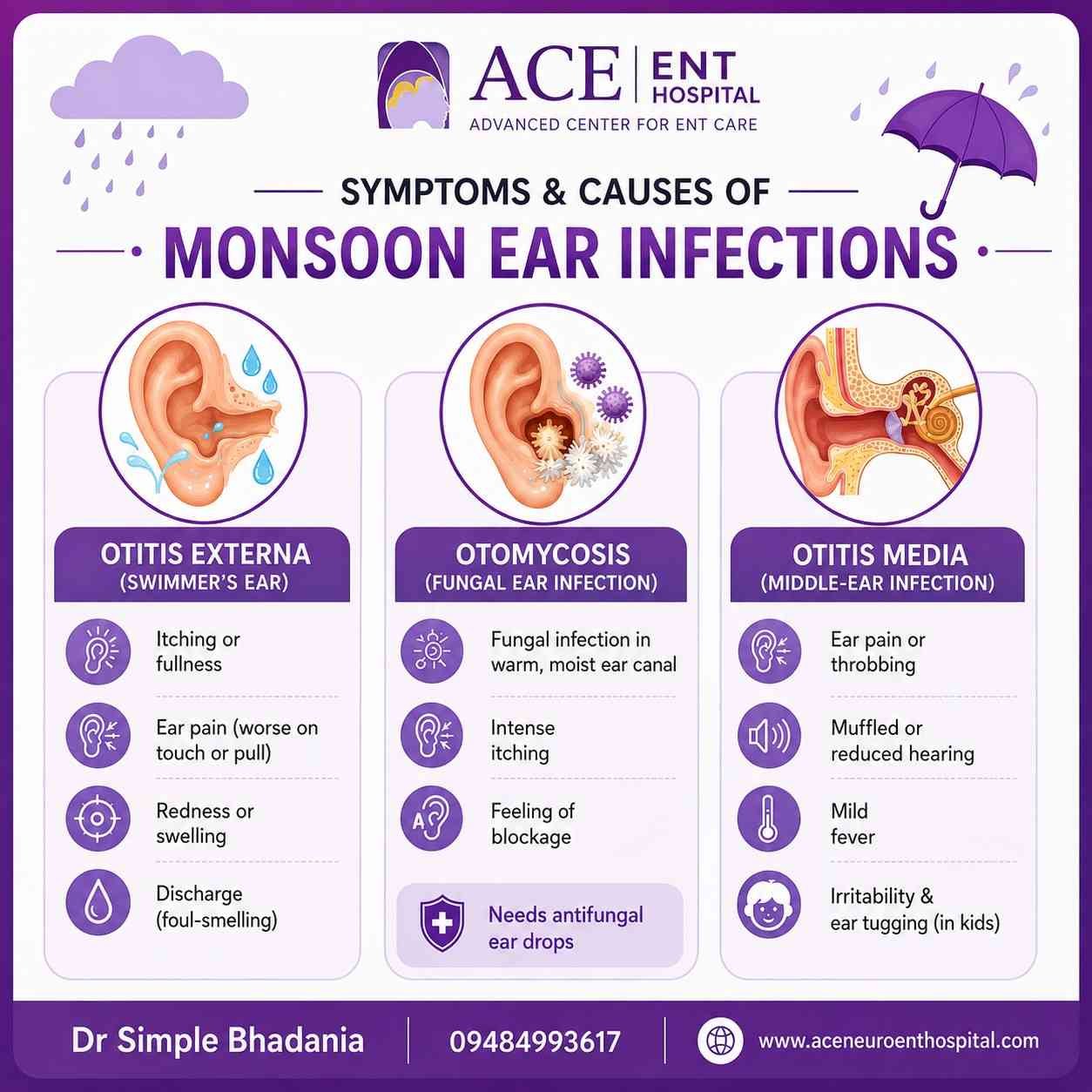
Monsoon-related ear infections generally fall into a few categories, and knowing which one you might have helps guide the right treatment.
Otitis Externa (Swimmer’s Ear)
This affects the outer ear canal and is usually triggered by trapped water after a shower, a walk in the rain, or hair washing. Common symptoms include:
- Itching or a feeling of fullness in the ear
- Ear pain that worsens when you touch or pull the ear
- Redness or swelling of the ear canal
- Discharge, sometimes foul-smelling
Otomycosis (Fungal Ear Infection)
A particularly common monsoon problem, otomycosis develops when fungi such as Aspergillus or Candida colonise the warm, moist ear canal. It tends to cause intense itching, a feeling of blockage, and occasionally a thin discharge. It’s more stubborn to treat than bacterial infections and often needs antifungal ear drops rather than antibiotics.
Otitis Media (Middle-Ear Infection)
This develops behind the eardrum, usually following a cold, sinus infection, or throat infection, all of which are more frequent in the rainy season. Symptoms include:
- Ear pain or a throbbing sensation
- Muffled or reduced hearing
- Mild fever
- In children, irritability and tugging at the ear
What Causes All of This?
The root causes behind most monsoon ear infections come down to:
- Water entering the ear canal (rain, bathing, hair washing)
- Humidity keeping the ear canal moist for longer
- Excessive or improper ear cleaning with cotton buds, which can cause earwax blockage or damage the skin lining
- Weakened immunity or an ongoing cold that lets bacteria and fungi take hold more easily
Ear Care Tips for Rainy Season
Prevention is genuinely simple once you build a few habits into your routine.
- Dry your ears after every wash. Gently tilt your head to each side and pat the outer ear dry with a soft towel. Avoid inserting anything into the canal itself.
- Use an umbrella or hood in heavy rain to keep rainwater out of your ears as much as possible.
- Skip the cotton buds. They push wax and moisture further in and can scratch the delicate ear canal skin, making infection more likely.
- Keep hearing aids and earplugs clean and dry, and avoid using devices that don’t fit well.
- Don’t ignore a lingering cold. Treat colds and throat infections promptly, since untreated infections can travel to the middle ear.
- Avoid self-medicating with random ear drops. Using the wrong drops (or drops meant for a different type of infection) can make things worse or mask symptoms. See our guide to the right treatment options for ear pain before reaching for anything at home.
- See a doctor early if symptoms appear. Ear infections caught early are far easier and quicker to treat than ones that have been left untreated for days.
When to See an ENT Specialist
Most mild cases settle with timely care, but you should book a consultation if you notice:
- Ear pain that doesn’t improve in a day or two
- Discharge from the ear, especially if it smells unpleasant
- Sudden or worsening hearing loss
- Fever along with ear pain
- Recurring infections, more than once or twice a season
Why Choose ACE ENT Hospital for Ear Infection Treatment in Ahmedabad
Ear infections, especially monsoon-related ones, need an accurate diagnosis before treatment: bacterial and fungal infections look similar but respond to completely different medications. At ACE Neuro ENT Hospital, care is led by Dr. Simple Bhadania, an ENT specialist in Ahmedabad with over 12 years of experience and a fellowship in Minimally Invasive Endoscopic and Skull Base Surgery from Weill Cornell Medical College, New York.
Here’s what sets the clinic apart for patients dealing with ear infections:
- Precise diagnosis using proper otoscopic and endoscopic examination before starting treatment
- Experience across 5,000+ ENT surgeries, including complex ear surgeries and other ear conditions
- Personalised treatment plans, not a one-size-fits-all prescription
- Guidance for recurring cases, including advice on hearing aid care, allergy management, and Eustachian tube dysfunction
If your ear pain, itching, or hearing trouble is lingering into its second or third day this monsoon, it’s worth getting it examined by a trusted ENT specialist in Ahmedabad rather than waiting it out.
ENT Specialist Care in Ahmedabad
If your ear pain, itching, or hearing trouble is lingering into its second or third day this monsoon, it’s worth getting it examined by a trusted ENT specialist in Ahmedabad rather than waiting it out.
FAQs on Ear Infections in Monsoon
Can rainy weather cause ear infections?
Yes, indirectly. Rain itself doesn’t cause infection, but the moisture and humidity that come with it create ideal conditions for bacteria and fungi to grow in the ear canal, especially if water gets trapped inside after getting wet.
Do ear infections go away by themselves?
Very mild cases of irritation may settle on their own with good ear hygiene, but true bacterial or fungal infections usually need prescribed drops or medication. Waiting it out can allow the infection to spread or become more resistant to treatment, so it’s best to get it checked if symptoms last more than a day or two.
Can massage help an ear infection?
No. Massaging or pressing around the ear does not treat an infection and can sometimes worsen pain or push discharge further in. It’s not a recognised medical treatment for otitis externa, otomycosis, or otitis media; proper ear drops or medication are needed instead.
Can dirty pillows cause ear infections?
They can contribute. Pillowcases that aren’t washed regularly can harbour bacteria and fungi, which may transfer to the ear, particularly if the ear canal is already moist or has minor skin irritation. Washing pillowcases frequently, especially during monsoon, is a simple preventive step.
What are some home remedies for ear infections?
Keeping the ear dry, avoiding cotton buds, and not inserting any oils or liquids without medical advice are the safest home measures. Home remedies like garlic oil or warm compresses are commonly discussed, but they aren’t a substitute for proper diagnosis. Using the wrong home remedy on a fungal infection, for instance, can make it worse. If symptoms persist, see an ENT specialist rather than relying on home treatment alone.